
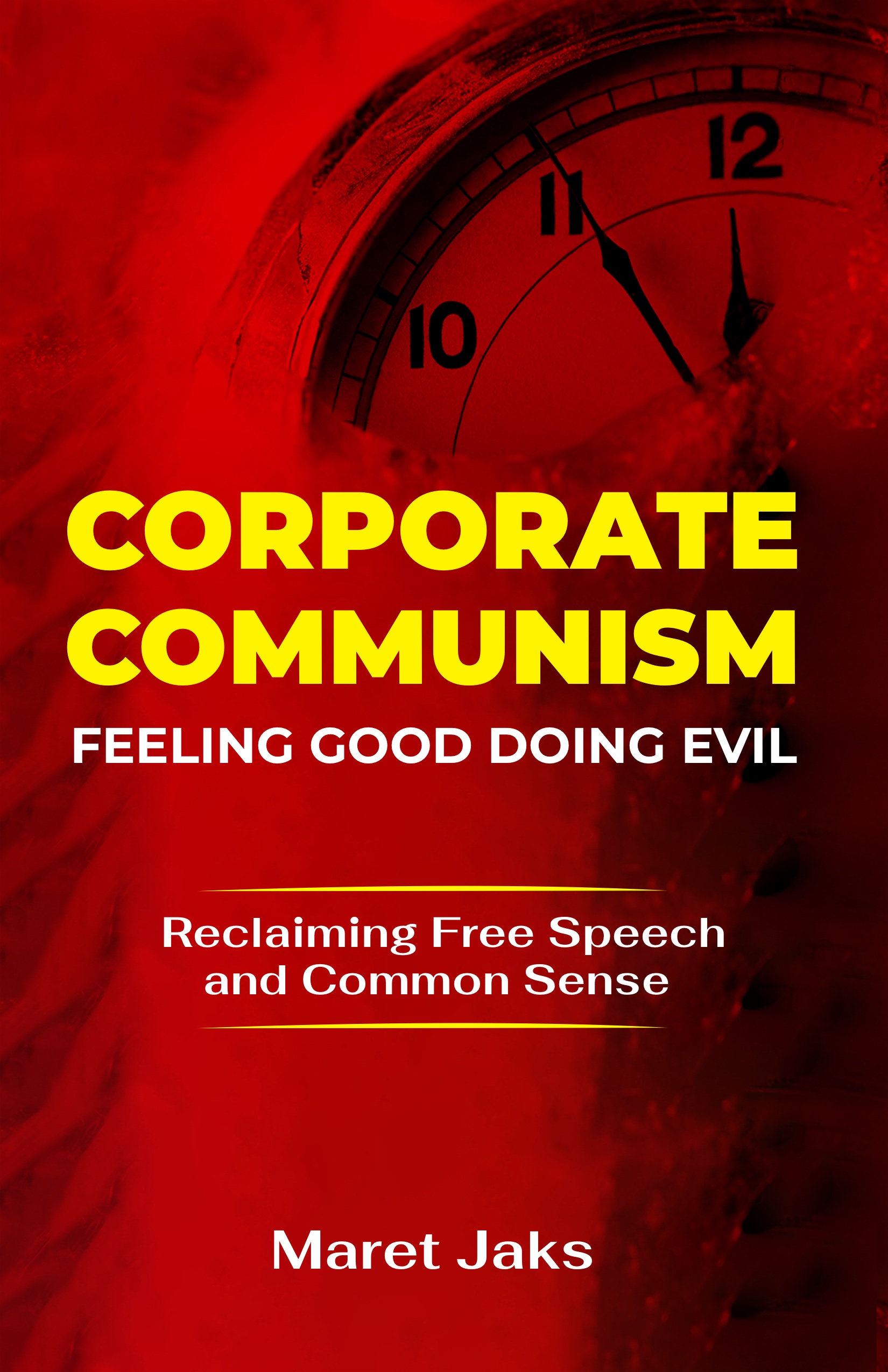
Ironically, though, young people who protest against capitalism today are playing right into the hands of the mightiest capitalists while unwittingly undermining what made the West the best place on earth to live: free thinking and free speech. Hold Western civilization up to utopia, and it falls short. Hold it up to any other in history and its justice system is second to none. Only the West grants rights to all humans regardless of race, sex, and sexual orientation. Only Westerners believe in the rule of law though, as Jaks shows in this book, the effects of corporate communism are undermining equal justice.
As Maret Jaks points out in the book, "Control the accepted narrative and you control the conversation. Control the conversation and you control the people. Control the people and you can do just about anything you’d like."
The future is not yet written. It is ourse to shape—one honest conversation and principled stand at a time.
PREVIEW
Preface
"Under capitalism, man oppresses man. Under communism, it's the other way around." (Polish Joke)
I was born in the shadow of the Soviet Empire, a system of government that promised to deliver a better world but instead brought only starvation, death, and unbelievable horror.
It is hard for the average person living in the West to truly appreciate the living nightmare people were forced to endure for the dream of a better world—unless your family was shattered by communism, as mine was. I am writing this book as a warning: the West is facing an insidious new form of communism, one that I call “corporate communism,” with Canada as its poster child.
When I was a little girl, I sometimes found my mother crying on her bed in the afternoon. I’d stand at the door and think, “Oh, she misses her daddy.” Her father, my grandfather, had been “disappeared” to Siberia and lived there completely isolated from the world for seven years. No one knew where he was or whether he was still alive. Only when Stalin died an ignoble death in 1953 were political prisoners set free. My grandfather, once a robust and hearty farmer, was shipped home to Estonia on a stretcher, mere skin and bones, unable to walk. He lived until 1983, trapped behind the Iron Curtain in a communist “utopia” that people were forbidden to leave. He never saw his daughter again.
My Estonian mother escaped communism as a child. In 1944, she and my grandmother fled by boat to Sweden, ultimately finding safe harbor in Canada. My mother lived the rest of her life inside its aftershock. The rest of our family felt the dark echoes of communism, too. We lived among other Estonian refugees in Toronto, surrounded by a quiet, persistent ache—an impossible longing for loved ones “back home” in a country the Soviets had erased from the map. When I was growing up, you couldn’t easily find books on Estonia, its culture, or its history. Communism always wants the past obliterated to build a bold new future.
Once, when my mother returned to Sweden with my brother and me—visiting the people who had cared for her while our grandmother recovered from tuberculosis in the late 1940s—my grandfather, with permission from the communists, was able to make a phone call and speak to his daughter. To do this, he had to go to the Telegraph building in Tallinn because there were no overseas lines directly out of Estonia. All overseas calls were routed through Moscow and the first thing a person heard was in Russian: “Vash razgovor proslushivayetsya (Your call is being monitored).”
There in Sweden, I watched my mother’s face as she spoke to him. The last time she had heard her father’s voice, she had been six years old. As she stood there listening to him, my mother’s face shone like that of the little girl who had played in the fields at the family farm before she was bundled up and placed on the horse-drawn cart, forced to say goodbye to her father forever.
My mother held the phone receiver tightly to her face with both hands, as if this would bring him closer. She said almost nothing. After she hung up, I asked her what my grandfather had said. “I don’t know,” she replied. “He was speaking so fast. He wanted to get so much in, but we only had five minutes. His Estonian was too sophisticated for me to understand.”
But she had finally heard his voice again, and that was enough.
I had answered the phone that morning and heard his voice, too. It was rich and deep. I still carry his voice in my heart, a voice filled with excitement and joy because he had finally parted the Iron Curtain to reach his family for the one and only time in his life. But I couldn’t understand what he was saying, so I handed the phone to my mother.
The two had written each other over the years in very, very carefully worded letters. Censors read every single letter going in and out of the Soviet Empire, especially letters from those like my grandfather who had been political prisoners. Censors were hired to cut out parts of the letters that made communism look bad or made the West look good. After receiving a few letters with chunks cut out, father and daughter learned to be very careful about what they wrote to each other.
In short, they censored themselves.
Self-censorship is now part of everyday life here in the West, especially in Canada, and many of us don’t even realize we’re doing it. People don’t claim their right to freedom of expression because they are afraid. Many Western countries are now riddled with speech laws. Being afraid to voice our opinion in a Western nation was unthinkable just a few years ago. Now people speak in whispers, even in their own homes.
While we don’t get woken up in the middle of the night and sent off to Siberia, many of us have been “banished” from society in a number of different ways, some unique to the 21st century. We have been unjustly fired and made “unhireable,” shunned by friends, and deleted from social media. Many Western governments and corporations have found ways to make us suffer if we disagree with the socially accepted political narrative—the party line.
People have even had their bank accounts shut down for political reasons—not just in Canada but in the U.S., Germany, the UK, and other Western nations.
Being debanked is a financial form of censorship, and a very powerful one. It is one more way that corporations interfere with a citizen’s right to free speech.
By corporate communism I mean the merger of state power and concentrated capital that uses the language of equity, safety, and the common good to narrow what citizens may question. It is not the gulag. It is a system that rewards compliance and punishes dissent while claiming to be kind. I define the term fully in Chapter One.
Corporate communism’s greatest asset is our kindness—our eagerness to support good causes without asking hard questions. For decades, our democracies have been steered toward the interests of major corporations, banks, asset managers, and very wealthy individuals. Young people who believe they are dismantling capitalism for the “warmth” of communism often strengthen the very people and corporations that have undermined true economic justice.
Setting citizens upon each other is an effective strategy for consolidating political control. I am especially alert to policies that edge us toward a life underpinned by communist principles of centralized power and censorship because my own family directly suffered from that.
To combat corporate communism, the first thing we must do is see it. Then we must reclaim our right to think and speak as we wish, because freedom of speech is the foundation of democracy. Without it, we lose all our other rights.
It may feel overwhelming, and it may seem that there is little we can do. I disagree, though as a child I felt the same hopelessness about the Soviet occupation of my mother’s homeland. After holiday meals, my brother and I would be sent to bed, but we’d sneak back down for a pickle and then sit on the stairs behind the railings and listen in on the grownups. Dinner guests who also had family trapped behind the Iron Curtain would sit drinking vodka into the night speaking passionately in Estonian. I still understood a bit of the language then, but my brother didn’t. Turning to me, pickle in hand, he looked up and said, “What are they talking about?”
“They’re talking about when Estonia will be free again,” I said, adding with a mix of despair and disgust, “Silly old people!” It was hopeless. Didn’t they understand that? Hopeless.
But I was wrong.
On August 23, 1989, two million Estonians, Latvians, and Lithuanians stood together, arm in arm, forming the longest human chain in history—and sang for their freedom and independence. Weaving across the three countries through each of their nations’ capitals, the chain stretched for 420 miles (675 kilometers). And they won, exposing a visible crack in Soviet power. Months later, the Berlin Wall came down and soon the world could see that the Soviet Empire was crumbling.
What we face today is not as dark and threatening as what my relatives suffered under communist rule. But we are experiencing a tighter and tighter grip on our rights. Our ability to question authority and speak freely is under attack. Undermining free speech is not “nice” no matter what some people claim. It is a direct assault on democracy and only strengthens the power of the already powerful.
My hope in writing this book is that it prompts questions and conversations. You likely will not agree with everything I say—I’d be surprised if you did. But if it helps you see things a bit differently, makes you a little more suspicious of those corporate feel-good messages, and makes you want to know what’s actually behind them, that’s a great start.
Echoes of Evil Past
"Markets don’t like uncertainty. Markets like totalitarian governments … and democracies are very messy, as we know in the United States — you have opinions changing back and forth." (Larry Fink, CEO BlackRock and Co-Chair of World Economic Forum) [emphasis added]
You might think that communism and corporations are like oil and water because communism claims to care about people and corporations care about money. You’d be wrong. Both communism and multinational corporations care about power. Both communism and multinational corporations abhor the nation-state and look to a global world order. Both communism and multinational corporations demand that people act, speak, and think in a certain, precise way.
Pure communism involves the state’s seizure of business assets. Corporate communism does not. It is capitalism on steroids using the tools of communism—speech control, one accepted narrative on a given topic, and severe consequences for those who disagree. Moneyed and multinational interests tightly align with politicians to shape society. The result is a disempowered citizenry growing poorer, hungrier, and less secure. Powerful actors set the direction at the global level, national governments implement it, the media shapes public consent, and ordinary citizens are left reacting to decisions already made.
When the rich and powerful shape both our conversations and government policies in such a way that we are permitted only one way of seeing the world or else we face personal consequences, voilà, say hello to corporate communism.
The various global organizations they support have helped sever the relationship between citizens and many of our governments. When important decisions are made at global forums and then imposed on democracies from the top down, do you really have a democracy? Those who run these groups, and those who fund them, are the new ruling class—and the very idea of a ruling class is anathema to any self-respecting citizen of a democracy.Of course, those involved like to call themselves “elites,” but that flatters them. An elite athlete earns the title. The “elites” running our countries treat everyone outside their circle as unqualified to judge what’s best for their own lives and unfit to sit at the table. That is how a ruling class takes a democracy: not by announcing the theft, but by deciding that other citizens have no right to engage.
Throughout this book, I speak of “they,” but note this: when I speak of “they,” I am not speaking of a secret cabal of billionaires who have set out a strategy to undermine the West. I’m referring to a global power system that interferes with and disrupts our democracies. When the same networks help define the problems, steer the money, and police the language, their overlapping interests become a force that governs from the top down. Influence becomes rule—and that is a ruling class in practice, whether or not it calls itself one....


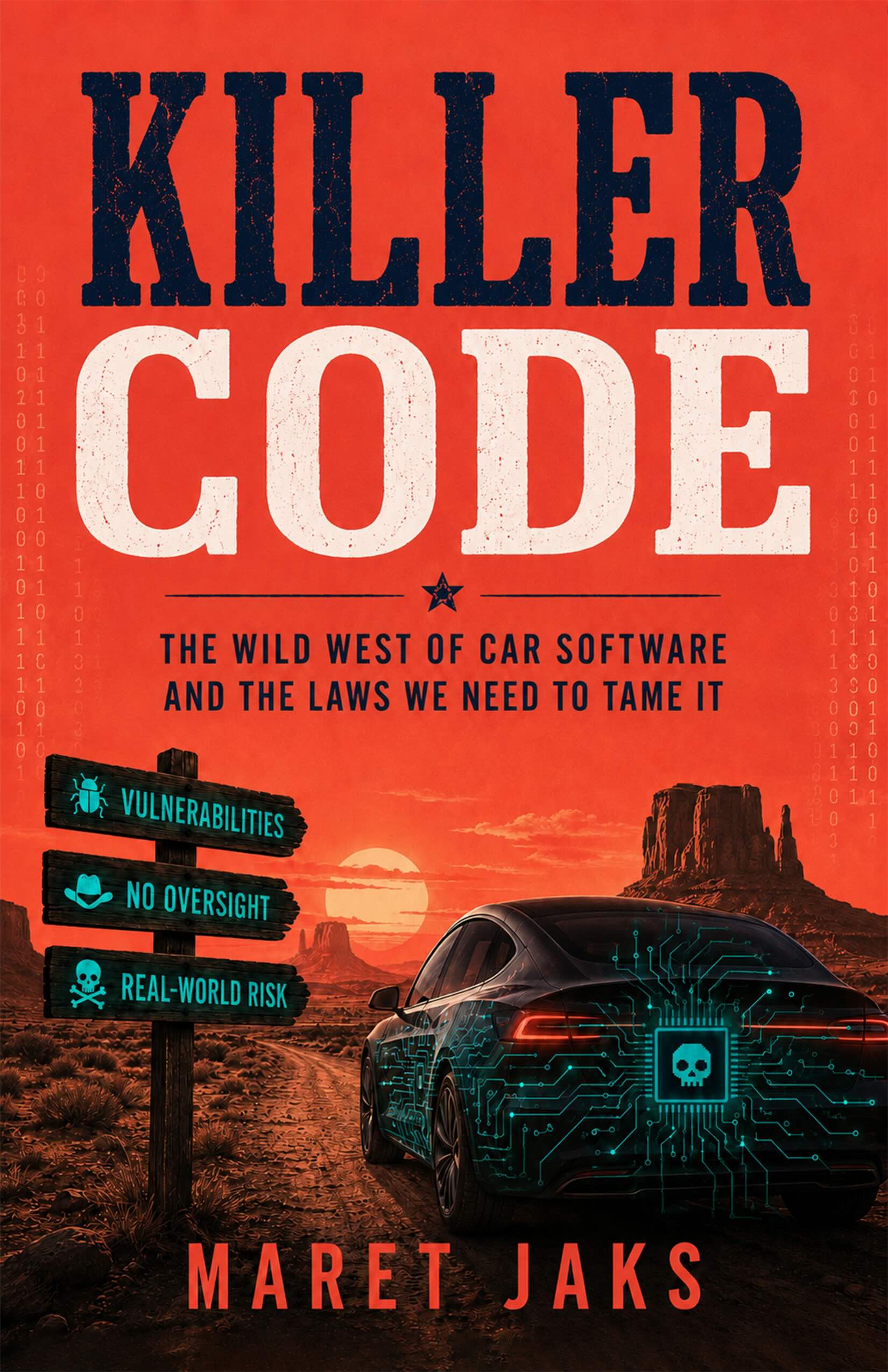
Pre-order now to secure your copy of CORPORATE COMMUNISM: Feeling Good Doing Evil before its official release. This book was written for this moment we are in — when truth is under siege, kindness is being weaponized against our own best interests, and power is hiding behind a smiling corporate face.
If you’ve ever felt that something is deeply wrong with the direction the West is heading, this book will give you clarity, courage, and a path forward. By pre-ordering, you help send a clear signal that honest voices will not be silenced. Your support right now directly strengthens independent publishing against corporate and ideological gatekeepers. Thank you for standing up for free speech, clear thinking, and a future that still belongs to free people.